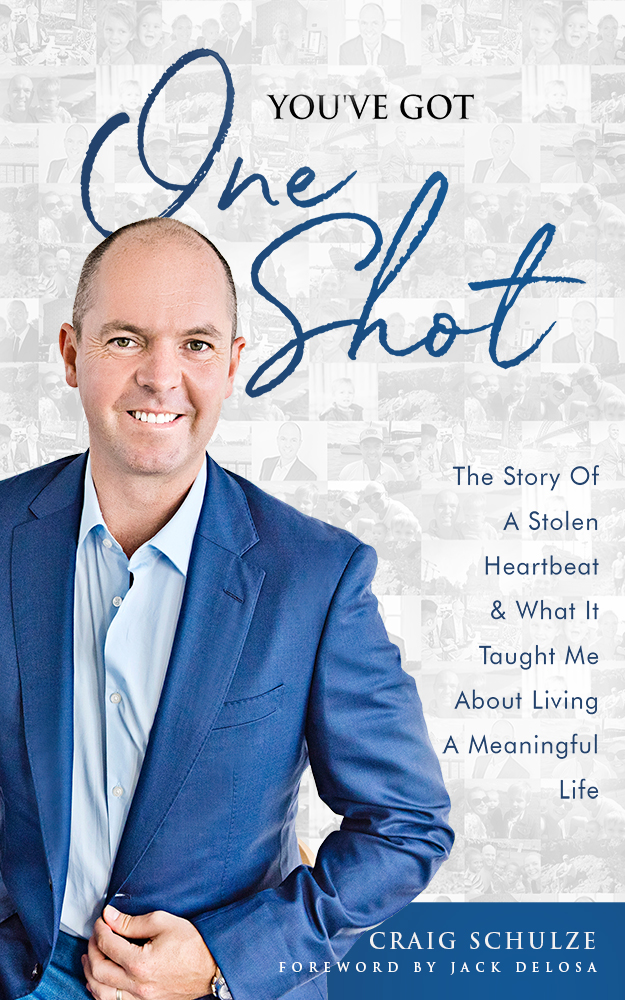
0:00:06 - Craig Schulze
Okay, everybody, welcome to this week's episode of the One Shot Movement podcast. We dive deep into the stories of entrepreneurs, business people, anyone that's out there making it happen. We are running a very special season at the moment where we're talking to CEOs, founders, franchisors about all things business and growth. And I have a very special guest today. His name is Ran Samarikun Hopefully I pronounced that correctly and he is the co-founder and CEO of a phenomenal brand called Cosmetic Avenue in the high growth cosmetic industry. So we're going to talk about things, all things around his business, why this has taken off so well, and just learn about the challenges and adversities and things that you should know to help you on your journey to success in business and franchising. So welcome to the show, ran.
0:00:57 - Run Samarakoon
Craig, thanks very much for having me. I'm really excited to chat with you today and speak to you and your audience.
0:01:02 - Craig Schulze
Very good and look. I always like to intro somebody into the show, but most of the feedback that I get these days is I love hearing people's stories. So I'd love to hear a bit about your journey and provide a bit of context to how you got started in business and Cosmetic Avenue.
0:01:18 - Run Samarakoon
Absolutely, absolutely. So my journey goes back. I've got a bit of a different journey in my historical part. So I think I go back to doing a degree at university called medical biophysics and instrumentation right, a degree that I absolutely hated, and it led me, however. It led me to be a cardiac physiologist coming out of university and, for those of you who don't know what a cardiac physiologist is, basically we work in hospitals and for patients that come through with any cardiac issues. We were there to test, to run tests on them, to really to diagnose what those issues were. So ecocardiograph, ccgs, electrophysiology tests.
I did that for a couple of years, both here in Australia and over in the UK, in London, but got bored very, very quickly and while I was in London I met a couple of friends who are cardiac physiologists and I was telling them that this is not something really I want to do. I can't see myself doing it long term, anyway. So we had a conversation, my wife and I. We ended up moving to Japan and living in Osaka, japan, for a year, and out of the blue, I got a message from one of those friends and said hey, run, I remember you saying that you weren't really passionate about your career at the time. I'm now joined a medical device industry specializing in cardiac devices and we're looking for someone who's passionate about the industry, passionate about sales and marketing, and I think you'd be perfect. So I ended up having back then it was Skype, there was no zoom a Skype interview with the company back here in Australia in Melbourne, and they interviewed me and I got off of the job and I flew home from Japan to Australia and that led me to join private industry and I moved into the cardiac device space there we really specialize in pacemakers and implantable defibrillators and I moved into away from hospitals into a corporate career and I absolutely loved it. It was, it was brilliant.
I did that for almost 15 years working here in Australia and then again the role took me back to the UK and I was in that industry for a long time and you know, prior to starting Cosmetic Avenue, I was director for a company that specialized in artificial heart valves and I was director for Australia and New Zealand and I got to a point in my corporate career where the company was a European company and they were talking to me about being a multinational general manager and what that meant was that I would be traveling for probably about six months out of the year. My wife and I were about to have our second and third child, so we were having twins and the idea of being away that that long and that, you know, for that length of period of time for my kids and my family, my young, young family, it just didn't appeal to me. I remember one of the one of the senior guys who was a European guy and he came up to me and he's, like you know, run this when I was your age, I was one of the youngest directors in the company at the time and he said when I was your age, I had an opportunity like like yours, and it was great. I traveled around the world and I led, led my teams, and I was away for six months and then I'd come home for six months and I was sitting there going. I don't know if you're trying to sell this to me, because that sounds to not sound like the life that I want for my young kids. And so throughout that process, you know my now business partner, who was a friend of mine, for we've been friends for 20 years. We were always chatting about business opportunities and he was in the cardiac device space as well, and we saw an opportunity in the cosmetic space very different from what both of us were doing.
We saw an opportunity in the cosmetic space and back then it was the cosmetic surgical space and we were looking at that space and analyzing it and we realized certainly here in Melbourne the way that it was delivered to patients was done such in an old school, antiquated way, in that whole patient experience was centered all around the surgeon. You know, if you're going for a consultation with your plastic surgeon, it would often be four stories up in consulting rooms. His name would be on a brass plaque on the wall You'd walk in. Most often it'd have his wife sitting at the reception desk in a pretty sterile and clinical environment. And we thought, hang on, we've got. We've got these people going through this huge transformational journey themselves. They're making a big emotional, financial decision to make a change for themselves, to really change something that they know has been affecting their confidence for some time. And that whole process it's not an area of medicine that's around pain. It's all about increasing someone's confidence and that whole focus should be around the patient and being patient centric, not around the surgeon. And so we flipped it.
So we created our own clinic and neither of us are surgeons, so we had to find we had to find surgeons to come with us. We created a clinic and it was really about the environment where we felt that patients could walk in. We created this stunning environment where patients could walk in. They felt welcome, it was warm, we employed engaging, friendly people that, just you know, made you feel, made you feel like you belong to soon as you walk in. Even the consulting rooms there was no big desks between the surgeon and the patient. You know, our surgeons and patients sat side by side in a collaborative way and this whole environment.
And we started using social media and online presence a lot more. A lot of these websites back then that were slapped together by the surgeon's son and they were just really dodgy and really basic and we saw what was happening overseas. Like you know what, we can use social media in an educational way to give people insights on how, on more information about these procedures. We can also use this as a platform for people to share their experiences, because we know that people going through this transformational journey often want to have a support community around them and share their experience and share their journey. And so we developed a really strong social media page. We developed a Facebook community group. That community group has now got over six and a half thousand women in there sharing their, sharing their experiences just with Cosmetic Avenue. It's a brilliant community. And so this really took off.
You know, in Melbourne the business grew really rapidly. We were really fortunate. And then we got hit with COVID and all surgeries and all surgery stopped and it was a really tough period for us. And so that point we were just like, okay, it's either sink or swim here, because Cosmetic surgery and other surgeries weren't weren't happening. We we had a business that we had to, had to run. We had a whole team of Staff, like every other business had. So what do we do here?
And so I remember listening to a podcast during during lockdown and I just and I started hearing a business advisor. I'm like this guy really resonates with me. I said I want to really chat with him about what he thinks we can do so. Anyway, I reached out to him on Instagram, we started chatting, we created a board and he came on board as a non-executive advisory board member and, for the first time in our history Myself and Robert, my business partner we had someone looking at the business that wasn't just two mates and two co-founders and we had someone else looking into our business and holding us accountable and also helping us and mentoring us and giving us a bit of direction, and it was just a phenomenal change.
And through that creation of that board, you know, we had other people come on, come on and help us with with legal and financial advisors as well, and we decided to go down the path of Creating a non-surgical service that we could scale. We knew that. We just, you know, we knew that we couldn't scale the surgical business. It requires to be able to scale a surgical business, you require a really a lot of highly skilled plastic surgeons that are willing to come on board and not work for themselves and work for an organization, and that's just impossible. But we knew on the non-surgical side and I'll talk more about All our non-surgical services but on the non-surgical side we could do it because it required nurses, it required therapists Now we're working with dentists as well and we could do that. So we created our new non-surgical specialty clinic and this has now become the blueprint of how we're scaling now Australia-wide with our non-surgical and cosmetic dentistry clinics.
0:10:51 - Craig Schulze
Hmm, wow, what a story, and I mean I don't even really know where to start. You, as you were telling it, there's like about four or five really powerful topics we could dive into, you know, ranging from pivoting through, you know, a Period like COVID to timing, to building networks. You know I've got a very similar story in regards to being an engineer, then firing my boss when I was young to follow my dreams and passions five franchises, or 22 franchises later, five fitness clubs that I owned and you know, I guess, just taking a punt on yourself, and we were supposed to do this interview a week ago and then an opportunity just popped up out of the blue, literally from having a relationship with somebody. So you know the conversation around being in the right place at the right time, treating people with respect. You know these are really powerful things to help people grow their business.
0:11:48 - Run Samarakoon
So great. But I just on that, on that topic, I cannot tell you how many leaps and bounds cosmetic avenue has taken, because the the network of people around us. You know every major leap and has been about meeting someone or being in a network where you're introduced to someone and that person has either Introduced you to someone else or given you advice and that has taken the business to it to another level. So you know, I, I it's something I'm really passionate about and somewhat, and sometimes not always, really comfortable doing. But networking and increasing your exposure to other entrepreneurs is just so, so powerful and we absolutely wouldn't be where we are today Without, without that network and utilizing the network around us.
0:12:37 - Craig Schulze
Yeah, and I love to just reiterate the importance of that.
You know, you've just shared that and you know that's why I've invested in, you know, the largest entrepreneur education company in Australia and why I've Probably invested a million dollars into being in high-level masterminds with the type of people that you do want to Spend time with because they just seem to be able to introduce you to or open doors for, but one of the other powerful things that I've learned a lot is having that mentor or that guidance or, in your case, that advisory board person just to help you steer the ship.
So there's so much that you can unpack with that and I think you know. I think what I'd probably like to start with is you know, you mentioned your non-surgical model and I found that in the fitness industry, in owning fitness clubs, we were a real high level service business and To find a franchise or that was to give their heart to their clients as well. They were not falling off trees. You mentioned the surgeon was nearly a roadblock to that. Do you want to just share a bit more about? Now you're able to scale because you've got this non-surgical component or your your COVID pivot. Do you want to sort of just start at that point there.
0:14:05 - Run Samarakoon
Yeah, absolutely. So. I think you know this all started when we were having our board meetings and we were coming together and we were really fortunate because our non-executive board member had had franchise Multiple businesses that had a lot of experience in that and this is something that we we didn't have any experience in. You know, and I think this is again the importance of bringing on other people with more experience than you, that fills those gaps and can guide you in different ways. So looking at our business at the time was very line. On surgeons, yeah and but. But, like I said, fighting plastic surgeons and a large number of them to be able to scale across Australia with the vision that we had was was just not possible. You know, in this industry and like most, most areas of medicine, those surgeons want to work for themselves and have their own practice. So the non-surgical space allows us to pivot because with the non-surgical services that we're offering now and this is what we're franchising. So those services, they include cosmetic injectables, fat freezing, skin tightening, cellulite treatment, muscle toning, and then we've introduced also cosmetic dentistry, and those cosmetic dentistry treatments include your Invisalign teeth aligners. So replacement of braces now we put the clear teeth aligners in. They includes veneers, dental implants and teeth whitening. So it was interesting.
We we had our non-surgical services as we were growing and then we found out a lot of our clients were actually they were on this personal transformation journey, but they might have been, you know, getting rid of their wrinkles on their face or treating their cellulite or getting rid of those little pockets of fat. Then they go. I'm still not confident about my smile. You know, whenever I smile like my teeth are a little bit crooked or they're not that wide and they were going off to another clinic to To fix their smile. Well, hang on, we can do this. You know why don't we offer everything where people love the cosmetic avenue experience? You know, we're Australia's highest google reviewed practice now, with over 1205 star google reviews, and I'm like we know we've got a great community. Why are we? Why do we have to have our clients going Somewhere else? When we can, we can create the full offering for them, almost a one-stop shop where they could just come to us and get everything done. So we introduced cosmetic dentistry. We built our own dental clinic within the clinic, within the existing place in the new clinic. So now we're the only company in Australia that offers cosmetic dentistry as long with all of our non-surgical treatments, yeah.
And so the how we can now scale this. We're offering two models through our franchise model, and our franchise model is unique in comparison to other franchise models on the market. It's a 50-50 co-ownership model. But we're offering two models now in that we are getting dentists to come on board who are really passionate about cosmetic dentistry but then also want a unique dental practice where they just don't want to have a general dental practice, they want to focus on cosmetics and offer a whole range of other non-surgical treatments as well. So those dental clients can get treated with those other treatments too and they don't have to lose them to other clinics.
And they've got additional stream of revenue coming into the business, not just solely relying on dentistry. Or if you're not a dental practitioner and you're passionate about the industry, or you're an investor who sees an opportunity really in the industry, we've got purely the non-surgical treatment clinic Okay. And then again that's offering all your cosmetic injectables, fat freezing, et cetera. And so we're getting interest from both sides now. We started the recruitment process last year and we're getting interest from both sides with both models non-surgical plus dentistry, or just non-surgical on its own.
0:18:17 - Craig Schulze
And just I mean I don't know all the facts and figures of this, other than knowing that a lot of people have traveled out of Australia into Thailand and Indonesia to get these type of procedures From a price point of view is that the reason people are going over there to do it? Do they do it better? What you know is your model trying to be that, you know, don't fly to Thailand to do that type of thing. Now, is that just me just making something up, or is there something in that?
0:18:55 - Run Samarakoon
No, look, there's absolutely something in it. And certainly when you know, when we started the business seven years ago, that was a big thing. For cosmetic surgical procedures, people were flying overseas, and primarily because it's a cost saving yeah, it is much cheaper to get your procedures done overseas. However, there's a lot of risk with that and when and we started seeing the Australian market start pulling back from that on the surgical side because people started realizing the risks and with social media and things that were happening across all forms of media, people were understanding that, hey, listen, the quality of the facilities, the quality of some of the doctors over there not all, because I think there's some great doctors overseas as well it's not always up to the standard the Australian standards have, and if you come back and if there's a complication, well then you've got. You know you can't just fly there and you've got to fly back to really get that fixed.
And so the market started pulling back and started focusing more on getting treatments here in Australia. And I think as the market has become more competitive, prices have become more affordable as well. So we're seeing less and less people go overseas and utilize organizations here in Australia, which I think is really great for patients. You know on the non-surgical side that we're really focusing on. You know our business and expansion focus now is purely on the non-surgical side and the cosmetic dentistry. On that side we're seeing people utilize services here at home. Even on your cosmetic dentistry side, yes, there are absolutely people who can get overseas and it's cheaper, but those risks are still there and we're seeing more and more cosmetic services provided here. So people are really utilizing their services here at home.
0:20:53 - Craig Schulze
Yeah, and you just mentioned you've got these two models. You use the word investor, so just for the audience, because there might be people out there with money that don't want to do hands-on day-to-day type of work. Is your investor model somebody that doesn't need to have the specialist skills but can own the business? Or is it an investor model as well, where you can actually invest in a clinic without you know? It's nearly capital for a business to launch? Because you mentioned the 50-50, that might be a way for you to raise capital as well. Can you just touch on that?
0:21:32 - Run Samarakoon
Yeah, absolutely. So we've got a number of you know a number of investors coming to us saying, hey, listen, I've got the capital. I really like this industry. I really see the opportunity. All the financial information that we've talked about it makes sense. This looks like a really great investment.
I don't want to be hands-on in the business. That's not my thing. I'm not going to be in there treating clients or I may have multiple businesses and I don't have the capability to be in the clinic day to day or even throughout the week. We say, look, that is absolutely okay. In that scenario, what we look for is then maybe a co-investor to go in with that majority investor. Maybe that investor has got look, I've got all the cash.
We say, great, we might have someone who's passionate about the industry. It could be a nurse, it could be a therapist, it could be someone who just wants to lead the team and work in their day-to-day and they would invest a small portion as part of the investment with them. They've got skin in the game as we've gone down this co-ownership model and not a corporate model, because we've had the option do we expand and we go 100% corporate and do we just have managers that we employ, who are in there leading the team and managing the clinics. We decided that we didn't want to do that because we wanted people to really be in it and have skin in the game and be passionate about it and really drive the success.
I think we've seen and given the employment market and what we've seen over the last 10 years, that sometimes people they can earn more elsewhere, People aren't staying in roles as long as what they used to and there's more options available now. We wanted people who are leading and owning the clinic to have skin in the game and be passionate about it being successful. For those investors who don't want to work in the clinic, that's okay, because we've got other people who also do want to be part of Cosmetic Avenue but don't have all the funds for that full investment and we can partner those two up together and have that person working in the clinic but still have equity. So you know they're going to be driving that clinic day in, day out, because they're going to get their benefit from that as well and they're not just an employee, they're an owner.
0:24:03 - Craig Schulze
Yeah, that's an in-theory model that works incredibly well and that was certainly one of my personal strategies. I tried the manager with good money, the manager with incentives and the equity model for all the fitness clubs that I was involved in as well. So I've experienced all the different levels and if you've got skin in the game yourself, obviously you've got something to lose as well. So in theory, you've got the carrot to not be sinking. You should be swimming. Just a question again this is really for the audience. It's for you to showcase your model. You mentioned the word surgery or non-clinical surgery. For me, when I hear that word, I still think high level skill, high level training, regulation. You're dealing with people's body. What type of barriers from that perspective? Again, if there's someone that's listening to this and go wow, I am interested in this industry, this sounds like a great model, but I don't really have any skills in that space. What's that involved?
0:25:22 - Run Samarakoon
Yes, all right, so really good question. So there are restrictions on some of our services and primarily, well, let's leave dentistry out of this because you need to be a dentist. If you're doing dentistry, you've got to be a dentist. But if we're looking at our non-surgical treatments, cosmetic injectables is a big revenue generator for the business. It has got a massive, massive growth year on year in the market itself. I think they're looking at a compound annual growth rate of 26.4% between 2022 and 2030, like huge, huge industry in Australia.
But to be able to be administer cosmetic injectables you have to at least be a registered nurse with cosmetic injectables experience. So we have those registered nurses who come who work for us. We are not a training facility. We differentiate ourselves from the laser clinics that you might see in the shopping centres. We only take on experienced cosmetic injectors. So they've got a couple of years of experience under their belt, they're fully registered with APRO, which is the health regulatory body, and they are coming in and providing a level of service that people expect from cosmetic avenue now, which is a high-end level of service. We're more of a boutique, luxurious clinic than, like I mentioned, some of those laser clinics out in the shopping centres For the other services so for like your fat freezing your skin, tightening your cellulose treatment, generally, they're beauty therapists and you can come in with a diploma in beauty therapy and you could provide those services. Now, those beauty therapists can't do any injectables, but they can offer everything else that we're offering.
0:27:17 - Craig Schulze
Very good. So there's a good opportunity for people that are passionate about the industry, with cosmetic avenue for sure. You say that you've been in business for seven years in this space. You've pivoted into the franchising concept one year in and this is good for this series, as there are I have interviewed a takeover after 35 years. Somebody that's just taken over a business you know due to a retirement or whatever experienced a company at a 500 franchise growth, an American company with 50 franchises looking to expand out. So this is another conversation about early stage in terms of the franchising space. What's your vision for the company? Is it to be, you know, four boutique stores in every state of Australia? Is it to eventually expand internationally? Do you have a vision there?
0:28:17 - Run Samarakoon
Our vision of cosmetic avenue is to be Australia's most trusted cosmetic services provider and our goal in terms of expansion is 30 to 50 clinics over the next five years. Okay, our model being that 50-50 model, it is different from other franchises out there, where other franchise models where it's 100% franchise, you know the franchisor or head office will take a percentage of revenue and for that business model to work, they need a lot of franchisees. Okay, because they're taking that percentage of revenue and so they need you know we're talking about our space and some of the laser clinics 100, 200 clinics across Australia to make that business model worthwhile at a head office level. Because our business model is a 50-50 model, where we become 50-50 shareholders and co-partners, we are driven, all our drive, is to deliver profitable and growing clinics. Okay, so everything is just about driving profit through those franchise clinics and we all know that. You know businesses don't survive from revenue. Businesses survive through profit and I think that's a really unique thing for any co-partner looking to come on board is that we'll be working with you to ensure that your business and your franchise is profitable and growing, and that's why we don't need the 100, 200 clinics.
We are focused on getting that 30 to 50 over the next five years and the offering and the type of experience that we provide and where we're setting up. We're in retail, you know, stripping, retail strip environments, not the shopping centers. It's limited in numbers and we also don't want to cannibalize any other clinics that we have within a state or a city by having too many. That can be a problem for franchisees coming on board where you get their territories kind of invaded by. We've seen this and, craig, you would experience this, I'm sure, in the fitness industry where there can be multiple businesses within a close area and you're fighting over clients and that can just leave a bit of a sour taste in a franchisees. Now we don't want to do that and because we are 50-50 partners, we're never going to cannibalize our own business because we're business partners with each of these guys.
0:30:51 - Craig Schulze
Yeah, and just to clarify again for people that are interested in your 50-50 co-ownership model, do you then take a percentage of revenue as well as a part of that franchise or arrangement, or your arrangement is just a straight 50-50 model?
0:31:11 - Run Samarakoon
Yeah. So our model with the 50-50, being 50-50 shareholders, we share the net profits as well as all the revenue expenses all of that split and, like a business, when there's net profits those dividends are split 50-50 between head office and the co-partner. So that's the way it's set up. There is a management fee and a royalty fee percentage and that's a small percentage of revenue that goes into head office to fund the services that we provide there as well. In setting the clinic up as part of our co-ownership model, we offer a full turnkey solution. So it means that we'll find the site for the franchisee, we'll negotiate the leases, we'll get all the permits, we'll do all of the architectural work for the franchisee. We will then tender for builders. We'll manage the entire build for the franchisee. We're lucky Robert, my business partner, is a registered builder, so he works really closely in getting these new clinics up and running. And then we also recruit the entire new team for that franchisee and provide all that training. So when that franchisee steps into their new clinic, they've got a team that's fully set up, ready to go. They don't need to do a thing. We do it all for them and provide all the training to get their staff up and running, confident, competent, fully signed off. We've got a lot of internal induction and training portals that we get them to go through. Plus, we get the external training and certification from all of our treatment providers and suppliers to come in and certify every staff member before they ever touch a client to ensure that they're certified and safe to perform the treatments.
And then, once the business is running, part of our co-ownership model is we handle all of the digital marketing for the co-partners as well. So all your paid search, paid social SEO, we do all of that. We handle all of the social media. We have a social media in-house social media team that we utilize to grow that social media. And we also take care of some of the stuff that businesses and especially new business owners find really arduous and sometimes time consuming and difficult is we look after all of the bookkeeping and accounting as well for them. So that means that they get full transparency over the books. But all of that back-end entering data and getting all those books correct we take care of all of that for them from head office. Plus, we offer a full HR service as well, so that's assisting in recruitment, performance management, any HR issues they have along the way. We provide that service as well.
0:34:04 - Craig Schulze
Very good and my whole vision, my business, is really about educating, empowering people to make the most of their one-shot at life. I'm going to throw a left field question in here just purely because I picked up in your story. You know a lived life by living overseas, experiencing different careers. For me, prior to COVID, I'd been to about 120 different cities in the world and I always used to say that you learn so much traveling, living in different places, and I was going to probably 20 weeks a year in different countries and it enriches your life and I encourage everyone that I work with just to go out and experience what the wonderful world has to offer. What was your experience like as somebody that lived overseas in multiple countries?
0:34:57 - Run Samarakoon
And, yeah, but it was the best thing that I've ever done. You know, I finished my university degree on Friday and I left traveling overseas on Sunday and a six-month trip overseas turned into a three-year stint. You know, living in the UK and then over in Japan, and that experience for me, and then returning to the UK, when I was in corporate as well, I returned over there. My company took me over. The best experience I've ever had in my life is experiencing other cultures, but also finding that sense of independence and finding yourself, especially at a young age. You know, I traveled when I was 21 and I learned so much about myself. And I remember meeting friends and we were in Spain just the start of my travels, and then I met them a few months later. We met in London and they were like run like you're almost a different person.
And I was traveling by myself for three months, right, like you're almost a different person, like you're so much more confident You're, you're so much out there, and though in such a short period of time, of only three months, it had such a big impact on me, let alone the years that followed afterwards. And my wife and I say now and I say this to my uncle, three boys now. And I say, boys, whatever you do, I don't mind what you do in life. You can go to university. You can not go to university. You can be an artist, you can be an entrepreneur. I just want you to travel and see the world and experience the world overseas.
0:36:36 - Craig Schulze
That's the only thing I want you to do, right, Absolutely, and I would say, like in, you know, nearly a regimented society, travel brings out resourcefulness. You know you've got to think on your feet and you miss a flight, or your accommodation was a mess up there or your luggage hasn't turned up, or you know you go to a place you can't speak the language and you're struggling. You know you've got to think on your feet and be resourceful and that there is a skill that is transferable across. You know your ability to communicate and build relationships with people and all of these life skills you know transfer into business and you know helping you be a better father, a better mother, a better business partner, a better friend. So I thought I'd throw that in there and get you a perspective.
0:37:34 - Run Samarakoon
I couldn't have said that better myself, man. I 100% agree with you.
0:37:38 - Craig Schulze
Good. At the end of every episode always ask a series of questions. I call it the rapid fire section. It's not rapid fire answers, but just I ask the same questions to every single guest. So is there a book or a podcast or a series of books that you believe that somebody should read or listen to if they want to get ahead in life?
0:38:01 - Run Samarakoon
You know, I I read this book a little while ago. My business partner and I were reading it together and it was. It was a few years into our entrepreneurial journey and it was just a game changer for us and we absolutely loved it. And it was from written by Hezian Gabby Lidovich, who started the company Catch of the Day and their book called Catch of the Century, and it was such an incredible book that taught me so much and I'm super passionate about marketing and getting you know, getting the message out there to clients, and these guys really changed the way that e-commerce and and the retail environment was done in Australia and it is a brilliant book just on hustling and working hard and taking on opportunities that you may not be ready for but you just got to do it and what could eventuate there. So you know if I can recommend a book to anyone. That had a huge impact on me. You got to read this book.
0:39:03 - Craig Schulze
And I've interviewed 150 people for the show now and that's the first time that book showing up and and usually I probably heard every single book that's shown up and I actually haven't heard about that one.
0:39:16 - Run Samarakoon
So it is brilliant, it is brilliant.
0:39:18 - Craig Schulze
Very good. What about the best bit of advice you've ever received?
0:39:23 - Run Samarakoon
You know, I think the best piece of advice and this is well before my business days would have come from my dad. You know, we come from pretty humble beginnings and my dad gave me this advice that if you're going to do something, you make sure you do it properly. And that goes to everything that you do. You know, I think he gave me that piece of advice when I was in school, polishing my shoes Right, and it's gone from there and I remember and it was just like hey, listen, if you're going in, if you're getting ready for something or you're throwing yourself into something, don't just do it half-assed.
You do it as best as you absolutely can to make sure that you've done it properly. And I think, if you look back at anything that you're doing and you go, you know what I'm not quite happy with that, or I think I could have done it better. You just stop and you go. Well, you make it better. You don't just leave it the way it is, because you know you could have done it better and you've got to do it properly.
0:40:22 - Craig Schulze
That's phenomenal advice, actually, and very simple, and you don't need any level of talent to do something properly. So, well said, what about on the flip side? Is there some advice that's really just been terrible advice, or something that you just totally disagree with, like it might be the principle of just hustle harder? Yeah, I'd love to hear your thoughts.
0:40:49 - Run Samarakoon
I'll tell you what. I've got a bit of a funny story on that, one that I think I often look back on. And when we started Cosmetic Avenue, robert and I were like, how do we start this business? What do we do? You know, we said, look, we come from a medical device space. Why don't we meet with one of the medical device suppliers and start the conversation there? Right, that sounds like a good point, pretty familiar.
We went to one of the medical supplier meetings and we met with the owner of the company His name was Doug and we sat down with Doug and we told him what we were doing with Cosmetic Avenue and at the end of the meeting, you know, we were really enthusiastic and engaged and telling him exactly what our vision for the company was and what we were going to create and how we were going to do it, and we had all our forecasts and everything. We hadn't done anything at this day. And he looked and he just sat back at the end of this meeting he probably went for about half an hour 45 minutes. He's like run, rob, I don't know what you think you're doing, but you guys aren't surgeons. You can't come in and expect to create something like this, like this I deal with surgeons Like you guys are not, this is not going to work for you guys.
We kind of walked out when that's not what we expected. We said, look, you know, let's go have a coffee. And we kind of decompress. We sat down at the coffee shop and we're like you know what, mate, we've been working on this idea for such a long time, we are so passionate about it and we know, like within us, it's going to work. And you know what Fuck Doug I don't know if I can swear Craig, I apologize about it, but it was and that became our motto and it was just like you know, we're going to go for this and any time that someone tells us that we can't do something, we're going to remember it. Fuck Doug. And that became our motto for years.
0:42:45 - Craig Schulze
Absolutely, and my dad, hopefully, is not listening to this podcast. But you know, your parents are often very conservative and they're always trying to protect you and along my journey. Because I left home when I was 15, not because I wasn't loved, it was just because of opportunity and our school only went to year 10. And you know, when I got my university career, I was reasonably talented at sport and I had an opportunity to go to South Australia from Tasmania to South Australia. And dad's going, you've got a good job. Now, why are you going to throw your job away? Don't do it, Stay here and play footy, You've got a good career. So I threw my job away and went over there. And then, when I was over there, I ended up not only throwing my career away, I'm like now I'm starting a business. So I've actually thrown my whole five years of university away. And then I got a really good business.
I was South Australia's fitness professional of the year, multi franchisee of the year, and then I was looking to expand into Melbourne and dad's again go great, you've got a good business, you're 25, you're doing really well. Why would you want to start again? And I thought, no, I'm going to start again like that. So I love my dad dearly, but it's sort of been nearly a bit of a default to you know, and he's doing it from a place of protection, security and you're doing well. I take on more risk, but in a similar context that's sort of what shone up for me. What about this podcast is about empowering, educating people to make the most of their one shot at life. What would you say to somebody that's sitting there listening to this podcast and might not be happy of where their life's at they might be itching to try something. What would you say to empower them to make the most of their one shot at life?
0:44:31 - Run Samarakoon
You know, my philosophy, and I've always had this, even when I was in the corporate world, and I say this to my team now is that no matter if you're working for an organisation or you're an entrepreneur, you just I really believe you just have to work harder than everyone else around you and just put everything that you've got into it. And I think this comes back to what my dad was saying you know, if you can do something, you can do it properly, but you really need to just work your absolute butt off, because even if you're in an organisation and you're working for someone else, if there's opportunities that you want to go for and you want to get these opportunities, they may not be there at the time, but when the organisation creates those opportunities, you want to be standing out as that person who's already displaying those qualities. So it's an absolute no brainer for them to just go. You know what?
Craig is the person that we want to do this, because he just fits this perfectly. We don't have to look elsewhere, we don't have to advertise externally. He's a person and those opportunities will come. And I think, even so, when it's your own business, like you, just you've got to put in the work You've got it. You've got to first of all take the leap and do it, and then, when you do it, you've just got to work your absolute butt off and those dividends will pay off in time. But at the start you just got to work as hard as you possibly can.
0:46:00 - Craig Schulze
Yeah, and again, just to add on to that, because I think that's phenomenal advice and resonates with me, because a good friend of mine, jack DeLose, the founder of the entourage, said you've hit the top 1% of the industry, of multiple industries five times.
You should be teaching people to be a market leader in the industry. So I developed a program about helping business to hit the top 10%. Even aim for 1% of the industry and all the opportunities coming away, and always say to people when I'm training, you've got to focus on becoming the needle in the haystack, don't become the hay, and if you're the hay you just look like everybody else. Become your needle in the haystack. So I think that advice that you just gave is really profound. So I want to thank you for being on the show. Just share a bit about how people can find out about your opportunity, where people can connect with you, your communities. Feel free to share with the audience.
0:46:58 - Run Samarakoon
All right, brilliant, great. First of all, thank you so much for having me. I've absolutely loved our conversation. If people want to find out more about Cosmetic Avenue and the co-ownership opportunity, you can go to our website, cosmeticavenuecomau, and there's become a co-owner link in there. You can also find me personally on LinkedIn as well, so feel free to reach out to me Then. I'd love to speak with anyone who's interested in exploring the opportunity with Cosmetic Avenue.
0:47:27 - Craig Schulze
And for me. I want to thank you for taking the time sharing insights to business your story. It's been phenomenal, so thanks, ran.
0:47:36 - Run Samarakoon
Thanks very much, Craig. Great chatting with you today.