0:00:05 - Craig Schulze (Podcast Host)
Okay, everybody, welcome to this week's episode of the one shot movement podcast.
We dive deep into the stories of entrepreneurs, business people, anyone that's out there making it happen. Today we have a very special guest. He's a returning guest. His name is Nick Maxwell. Last time we spoke to him about his phenomenal sporting career being the captain of the Colomwood football club and actually being a premiership captain, which to date is the last premiership captain of that football club For our international guests. They would often be playing in front of 80 to 100,000 people at a game. So a really phenomenal sporting career. So go back to season two and listen to his phenomenal sporting career, nick Maxwell. Today we're actually going to be talking to him about his phenomenal business career and he's been a part of a startup which is launching into the high end shared workspace, which is really high end, high value, high level, high quality products. So we're going to be talking about a number of things in regards to business and leadership. He's the CEO of that company now, eclah. So sit back and enjoy this week's episode with Nick Maxwell.
Okay, everybody, welcome to this week's episode of the One Shot Movement podcast, where we dive deep into the stories of entrepreneurs, business people, sports star, anyone that's out there making it happen.
And we have a phenomenal guest today. His name is Nick Maxwell. For those that have been following the show, he was one of the very first guests that jumped on the show. We really focused and honed in on his phenomenal sporting career where he was the Premiership captain of the biggest sporting club in Australia, the Colleenwood Football Club, and he had a phenomenal story and I encourage you to go back to that because he had a lot of challenges and adversities just to get into his profession and then he becomes the captain of the Premiership team. I believe it was like one in 50 years, so it was truly a remarkable effort.
But this time we're going to be talking about a startup business brand, because Nick not only was a successful footballer, transitioned into administration and media personality as well, but he's involved now in the business landscape and he's got a phenomenal brand. We're going to talk about that called Eclah, if I pronounce it right. And, yeah, we're going to talk all about business and startup and growing and provide a lot of context to how to be a successful business person. So welcome to the show, nick.
0:02:50 - Nick Maxwell (Podcast Guest)
Long time, mate. Good to be back after being one of your early guests. So things have changed a little bit over the last few years since that happened. So yeah, 20 years in sport and now doing something completely different. So it's exciting.
0:03:05 - Craig Schulze (Podcast Host)
And I look, I always like to, and we and I do encourage people to go back to the show because Nick could talk for an hour about his sporting career, which he does all around Australia anyway. But do you want to just smooth over your sporting career for the new guests and then how you got into the position that you are today?
0:03:27 - Nick Maxwell (Podcast Guest)
Yeah, I know we haven't got too long to go into too much detail with it all, but I guess for me a lot of my story and I think a lot of everyone's story is actually what you face when you're going through the process of trying to achieve something, the highs and lows of all that. And for me I had a lot of challenges just trying to make it to an AFL list. I was in a lot of representative or was cut from a lot of representative teams. As a junior tried out with three different clubs to try and get a spot on their list and was denied and knocked back and then finally got an opportunity with the Collingwood Football Club on a one year deal. I got a second one year deal the year after and then from then on was basically lucky enough to debut and effectively play 200 odd games almost in a row, a few injuries and suspensions along the way, but outside of that was lucky enough to have a 12 year career and, as you say, being able to captain a team when I didn't really know anything about leadership or never been taught leadership, which probably for me, ended up being a strength of mine in that I just sort of tried to be just who I was and what I thought was right, rather than being a book leader, where I know you can study it and there's that type of thing.
But for me it's sort of more about what you go through with those experiences. And even when I go and talk to groups now about leadership and about developing people, it's actually about less about the texts of it and more about your personal experiences that you've had. So everyone's a leader in some way. They're either a leader of their siblings, they're a leader at work, they're a leader of their kids, they're a leader in their community. There's so many. Everyone is led by someone.
So for me it's about actually going back and helping them find parts of their journey that they've been on and obviously sport minds very public, a lot of those. So being able to share some of those stories so that everyone else can reflect when you're talking to them about their journeys, because ultimately their journey is way more important to the people they're leading than mine is. Mine's just a one off story that will last 24 hours, but every day they're the one, the people they're leading and the challenges they're facing is a path that they're actually on themselves. So for me it's sort of going back and looking at that. So I think we spoke from a football sense. Probably 80% of the podcast was before I even got to Colleenwood and the lessons we learned there and the things that form you as a human being and the way you think and the way you behave. So yeah, for me now it's another phase of life.
0:06:08 - Craig Schulze (Podcast Host)
Yeah and look, I mean I guess for you you were, in your own words, to be multiple times or not given the opportunity multiple times to really leading by example, because in your own admission, I think in that episode you said you weren't the best player on the side but you become all Australian maybe, or at least in the squad of all Australian, to lead a big club to a premiership. You know you really did lead galvanized people to become better people than that. Do you think the? I guess leading by example is a really important thing that you need to do if you want to be a good leader in business and life.
0:06:49 - Nick Maxwell (Podcast Guest)
Yeah for sure, and a lot of leadership. So I spent, lucky enough spent six years in the Melbourne Storm developing some of their emerging leaders to use at the Giants and Tom with Colleenwood AFIW Netball and AFL men's program developing leaders. And for me it's. I think we get too caught up on the inspirational speech or the inspirational moment that people feel that's just so unattainable for them, so far off where they need to be. But that's one percent of it for mine, and I give the example early on with the Storm boys I sat down with a young emerging leaders group and I said to him who's shown leadership today?
And they sort of looked around the table and no one said anything. I said, well, you haven't pointed one of them out and I said I was stopped. You had coffee this morning at 117 Swan Street and I stopped behind a tram and I looked across and there was a lady who was an old lady who was on a frame and she was walking towards the door to get in and she couldn't quite hold the frame and get the door and I said you let that. Your chair ran over there, opened the door for a letter through, shut the door, went back and sat down, I said, well, that's leadership, that's community leadership. There's 20 people around there who are a little bit embarrassed that they weren't the ones who jumped up to help her, but then also next time they're all going to be the first ones to jump up, because the experience that they just saw from you. So that's don't think of it as getting up and giving this inspiring speech that makes people want to run through brick walls, because that's only a tiny little bit. It's about all those little one percenters. So I think that we need to break it down and encourage those little behaviors. So, of course, every one of them from then on, from that conversation, when I point that out to them, they're going to leap out of their seat every single time when they see that situation again.
So again, that gets that little bit stronger. And then you keep pointing out the good things and the opportunities missed as well. So even one where you leave a room in a meeting room and if everyone doesn't tuck their chair back in and take their empty caps, then you've left that in a worse place for someone else. And again, it's only a little thing, but that's another form of leadership. So I think that for me it's trying to break it down and make people understand that it doesn't have to be something huge every time, but also we're going to build up to something huge because as your confidence grows, through all these little moments, you're going to feel better about yourself.
And then, instead of one big inspiring speech, we're going to we're going to set up a question in front of the group that you've already got the answer to, but no one else knows that and we've already practiced that answer five times, so you're confident in it. And then I'm going to throw it out and you're going to say it and everyone's going to go oh my God, how good was that? Well done, and then you're going to feel better about yourself. So there's a thousand ways to do it, but for mine, trying to help people with those little moments to build up and build their confidence. And then, ultimately, from again from that storm emerging leaders group I think there was five captains of NRL clubs came out of that little group and others are on in leadership groups at other clubs as well.
So they've all. They all ended up getting there. But it was so daunting for them at the start because they're looking at Cameron Smith and Billy Slater and Cooper Cronk, who are effectively the finished product and leaders of their country and their state, and we're just unbelievable in terms of leadership that it becomes daunting to look at that as a young leader coming through so trying to break that down from as we go.
0:10:20 - Craig Schulze (Podcast Host)
Yeah, and just before we get into the brand that you're involved with now, you forever. As long as I've known, you've been somebody that's always tried to get better at investing in yourself, and I always say to people your business and life will only grow to where you grow, and you've. You know whether it's been university education, different outreach learning programs. You threw yourself into business administration, which was high level sports administration. You went into the media, so you're always thinking about life after football and now you are in a position that you're in now. Do you think that that is critically important to a keep on growing in life? But B you know, I guess, keep challenging yourself, yeah 100%, because the world keeps changing.
0:11:12 - Nick Maxwell (Podcast Guest)
So if you stand still then you're gonna get caught holding the bag. So for me it's it's about how else. What other experiences are out there as well, and I think also part of that journey Wanting to be an AFL player. You know that there's an expiry down on that career and it's not it's not sitting in the side of the milk carton that says July 23rd 2020 or whatever it is it's. You never know when it could happen. You could break your leg tomorrow and you never play football again. So all sport again. So being realistic about that for a start, and then also working out what's that next passion.
It's taken me a long time to get to where we are with E-Clar and I never I didn't know that we'd get there, had a lot of doubts along the way and we're still at a ton of work to do. But at the same time, I did media because I enjoyed doing it. I like talking about the game. I did my MBA because I liked business. I went in and did leadership stuff and got experiences different clubs. I was sort of to IC in the footy apartment at Collingwood for many years. So those Experiences I didn't know exactly what I wanted to either. So it's about keeping those options open, and the more experiences and challenges Give yourself, then the more things you go. Well, I like that or I didn't like that, and and that's a big one with resilience, I reckon, when things go badly For anyone, or they fail or something doesn't go right, you, you tend to find out pretty quickly how much it means here, because if it goes wrong and you fail, then you either go okay, yeah, that didn't work and you move on to something else, or you go. Actually I'm not ready to let go of this. I'm gonna work out what those, how that, how I failed, and then work out how I can get better sign fail the next time. So actually I enjoy failure because it makes me work out how much it means to me. Because you fail every day, like you come out of a meeting and you go later on. You feel lame or for me, I'm no great sleeper, so I wake up at two in the morning and I'm like, oh, I should have thought of that and I'm not gonna even know what that subconscious is that makes me do that. But All those experiences it's you don't know, you think you know everything, and I even taken into again.
When you go and talk to different groups, I use this one page called generational perspective and I say who in the room here has said this bloody generation? They're not willing to work hard enough. They want everything handed to, want a plateau, etc. Etc, etc. And you see everyone over 40 put their hand up and go, yep, display. You see them nodding their heads and with you and actually go. Well, here's an example of why the generation coming through don't know any better.
So we found out Our news at six o'clock here in Australia, found at six o'clock on seven, nine or ten. Now this generation gets a minute after it happened on Twitter, so it's instant. We go down to blockbuster video or video easy and get that new release and you get there and all the tags are in there and Sold out, so you have to come back the next day, whereas. So you got that patience level. Whereas now you can download anything in 10 seconds and you can watch it.
Um, we asked the. We had to learn how to read them always. So literally a big book map where you'd work out where to drive, where I have to go, etc. Now you hit Google Maps and it's instant and you get it. Um, we'd play. I'd go to fishing chip chop mail man. I put $2 in the pinball machine. Once those five balls are gone, it's going over. Whereas now they're playing PlayStation or whatever they're playing, and I watched they play FIFA, young fellas, and they, they play FIFA. They get a goal kicked against them. They press reset and start again. I'm like, yeah, I mean, we've got the resilience to push through a goal against you. So All they know is now and that's.
There's another 15 examples about now for them, but the three most important things, in my opinion. One of them is relationships. It still takes the same amount of time to build trust and honesty and relationships and believe in someone. That's the same as what it was 20 years ago, 50 years ago, your, your degree or your apprenticeship. It still takes the same amount of time. Today is what it did 20 years ago, 50 years ago, um, and when you get into a job somewhere and your ability to understand the job, understand the business, understand the people you work with and work through that ladder, so to speak, as you go up, that's the same as what it was 20 years, 50 years ago.
So we're asking a generation of people to go um, everything in your life is now, but these three most important things. You have to be patient Like they don't know any different, as even all the world of social media, to get instant gratification all the time, whereas in a workplace they think, well, why not getting instant gratification Everything I do something good? The older generation goes I'll get a pat on the back every six months for doing my job, so do your job. That's not. You don't deserve pat on the back for doing your job. So it's a confusing time for a lot of them. So I think that we need to understand that and go into that and sort of Appreciate that there's there's different levels for people.
0:16:12 - Craig Schulze (Podcast Host)
Hmm, and we don't really want to spend each of the time on that, but I always talk about AI is again, it's just another generation coming through where automation and people lose. So we're nearly losing the human Spirit in lots of ways with all this automation, ai etc. And the. The word I want to pick up on here, because it's going to lead into how everything got started, is relationships. You know you've been phenomenal at galvanizing people, a building relationship, having fingers in lots of pies. You know you understand what really, what networking is. Like you and I, even though we went to each other's wedding, we hadn't spoken barely for five years. But as soon as I call, you pick up the phone or you get back to me straight away. How important is relationships and building relationships in this modern world? But how did you Come across a startup? Is it through relationships, networks, etc. I'd love to hear that story.
0:17:13 - Nick Maxwell (Podcast Guest)
Yeah, 100% it is. It's for me, that's probably all I know. So we talk about skill set. That's that's sort of the only real Great skill I guess I have. So for me and I feel, particularly since COVID, we've become so transactional, like, if you think about working in COVID, it was all I was in, it was all but on zoom, and I give the story Zoom or teams or Google meets, whatever it is where I'm asked now to go in and like, analyze and check out how a meetings run, for example, and you get onto that meeting and you log in and there's 15 different squares there's the leader who has his head shown, his head shown, there's the leader who has his head shown, his head, her head showing, and then all these other ones are all blank Until the leader goes right oh, let's get the meeting started. And so then it starts. That would be the equivalent of in a real-life meeting, all sitting in there and getting out and just going like this. Until he goes right, oh, let's start the meeting. Like you would never do it. So all those little moments that we're missing out on, which would be um, oh, craig had a day, your son go and he's swimming meet on the weekend. Or oh, your football team was terrible on the weekend, what happened there? But the bands are in the, all those little moments, a connection moments that build relationships, and we've missed all that, and so a big part of of what we're trying to build at ecla Is around relationships and there's a lot of levels to how we've gone about that. So come on, for a start, it's eight and a half years in the making to get us to this point.
So my brother-in-law and the co-founder, jesse Hayes he came to me and he was talking about we work and some of the I guess the co-working spaces were popping up and we sort of looked at and I said, well, I get that, but also I come from a, from sport, where it's connection and community. If you haven't got that then you can't succeed. So I said, what if we had a different take on that? And he went away and he's a genius went, did a ton of work on it, research, we built out a business plan that we could go and talk to people about and Took us five years to find someone who believed in it, who wanted to invest in it. Uh, and then COVID happened. So we sort of got pushed back again and cost us some time. That, um, I probably allowed everyone else to understand what we were trying to put forward because of those connections that have been lost.
So We've got uh in Hawthorne East, which is our first site, um, we've got 52 uh service offices, hospitality infused offices, um, and, and what we have is a really high-end finish. So we want people to feel like they go into a hotel, not going to an office space, for a start, um. So the fit out is obviously has to be high end for that, um, we've got really good technology and that we built an app from scratch. And how we bring all that together so booking meeting rooms, understanding our community, learning from each other, um, knowing who's in the building, knowing how we can connect people, um, and. And making life easy for people in terms of here's your billing, here's your itemized list, all that type of thing. So, again, how technology can help us do that. So fit out technology, but you need the people to bring it all together.
So the other part of what we have is we've got a members only bar, restaurant, cafe, dining room, podcast studio, event space all tied into that, and the reason I'm not in the podcast studio right now is because it was booked so I had to go find another meeting room. And that's, for me, is how we help employers. So, for example, a lot, particularly in Melbourne, a lot of employers are finding it really hard to get everyone back in the office full time. And the world's changed. They refuse to go back full time most rooms. So how do you if you have, for example, a four desk office with us and you've got four other people, so eight people rotating through that four? It means because they're working flexibly, it means that those eight people are never in the same place at the same time. So all those little connections in community elements and culture have been lost because they never see each other. So how do you bring them together? Well, that's where we come into it. We're downstairs, we have, with the members only event space and bar and restaurant.
We run events every Thursday night from six to eight for our members. So we put on food, drink and the entertainment for up to 60 members, and that's different every week. So I've had wine tastings and then discount on being able to buy the wines you like that night. So I've had leadership and culture talks. Gemma Watts is one of our members. She's an amazing one with a beauty brands and working through beauty and fashion. We've had just acoustic guitarists, just have more of a social night, which was cool.
We've got an amazing group who have a bureau with us, which is our Live Life Hole, which is Megan and Sarah, who go into schools and work with teenage girls on body image, health, sleep, depression, challenges that young females face, and it's a phenomenal program. So we did a night where they spoke about their program. And then we've got we had an oyster night last week where they come in and talk about oyster farming and the shucking oysters right in front of you and all these different flavors and wines, paired wines, criminal psychologists next week. So all these things mean that all our members can just pick what works for them and how I come back and what I want to do and how I want to do it. And that's also been part of our marketing employees.
We haven't gone out with this massive marketing plan to fill our space because we want to take it slow, to make sure that the right people are coming in and that's a big one for us. Is that obviously part of our hiring? We hire the character, initiative and work ethic and then we'll work the rest out. If you've got those three things, obviously there's elements that need certain skill sets, but if you can't tick those three boxes you won't get in the door. So, making sure that the right people for a start, so we can service our members, and then, outside of that, a more subtle approach through word of mouth in how we actually bring in people to the space.
0:23:41 - Craig Schulze (Podcast Host)
Yeah, so you really I guess first class in airline terms of the co-sharing workspace and you really provide an environment that's welcome in, with real high quality value, with all your events et cetera, and bring the right types of people into this environment, like day spa quality in a way, when you've got gyms and so you've got this here. You've only just been opened the doors. You have to go find an investor. What about your vision? Is it going to be just one epicenter location or do you have a vision to roll this out as a bigger brand?
0:24:31 - Nick Maxwell (Podcast Guest)
No, we're definitely going to have other sites and our members will have reciprocal rights to those other sites. But we're also taking it slow. That has been approaches already. We've only been open about six weeks, so there has been other approaches, but we want to get this right first and again. For us it's a bit more slow and steady.
We're not so concerned about competition because everyone has their place in this industry in particular, we've got a lot of different companies out there. As I said, sometimes our employees go oh, they've just opened someone around the corner from us and all that. I'm like that's all right, that's good, they've got their people and we'll find ours. So for me, it's more about just making sure that we do our brand right, and of course, you want to learn from all the other people in the industry and how they're working, and we certainly do that.
But at the same time, you need to look after your own backyard and I think at times, coming back to sport, you'd spend 95% of your time looking at your own team and how you want to play in the roles every week for your team and 5% about what the opposition do. So again, if you're flipped the other way, you spend too much time worrying about the opposition, then you drop the ball on your own role, on what you need to be doing. So in sport, particularly NFL football, you know 95% of what the opposition are going to do anyway, because everyone sort of knows. Everyone talks to each other. It's not rocket science. There are some that 5%, that is a little bit of a challenge. But again, just worry about what you can control more than anything, and then the rest of it should look after itself.
0:26:13 - Craig Schulze (Podcast Host)
Yeah, and you raise a really good point there when competition doesn't necessarily mean a bad thing and over saturation it could actually mean that it's a trend, and we have been through a really tough economic time and owning 200 office staff in the CBD is probably becoming a bit of a challenge for people. So these boutique co-working spaces are on trend at the moment and if you do your brand right and serve your community right, I think it's a really big opportunity for people like yourself.
0:26:49 - Nick Maxwell (Podcast Guest)
Yeah, you're right, and I think that that's probably what we're fan is that there's a lot of people, particularly people that are shrinking their footprint because they just can't get enough people in the city. Because I feel now that we, since COVID, everyone's time is more valuable than it's ever been before. So when you realize that you can save two hours a day by not commuting into the city just for certain people as an example not for everyone then that two hours can be spent in a number of ways A, you can be way more efficient with your work, but B, you can drop your kids at school, you can take the dog for the walk, you can go get your local coffee, you can go and do yoga class, you can be home in time to go to kids sport and being able to watch your son or daughter in their sport or their ballet or whatever it is. So I just feel that people's time is so much more valuable. So not only do we sort of have an opportunity, particularly now at this first site, to attract people from the area, but for the companies that do have their big office space in the city, we've got an opportunity to open a satellite for them, and so if you've got a satellite office out this side, you can almost have the best of both worlds, where people at this side can do their two or three days a week with us and then go into the city for the other two or three days and get the elements of both of it, which I think is truly important.
And, again, from our start perspective, it's important that we doing what we say we're going to do and we uphold that integrity. So, to give you an example, one of our bureau holders they're Swiss tech, they're called, and they do a lot of medical equipment and they're doing a ton of work in concussion space and a range of other areas. So I'm actually flying up to Darwin this weekend for three days with them to help with certain relationships that I've got and that they've got and to give a different perspective on certain things from my sporting experiences, but also through what we're trying to build with E-Class. So I think that again, we're us trying to put our money where our mouth is, not just yeah, yeah, come in here and we'll look after you, yeah, come in and we'll look after you, and then actually follow through with it. And that's the number one thing that we will do, because I won't, let us not do it.
0:29:05 - Craig Schulze (Podcast Host)
Yeah, yeah, and just facetiously saying that you don't want to open the door for people to downsize their footprint, because if half the staff are coming into you for two days a week they might not want to go back to the office ever because going into a day spa.
0:29:20 - Nick Maxwell (Podcast Guest)
Yeah, true, true.
0:29:21 - Craig Schulze (Podcast Host)
Yeah, and look, I think you know, I think the uniqueness is what you really need to do, and you just touched on that, the fact that you're nearly engaging with the brand to help add as much value as possible to that. And you know, I have been into many, many co-working spaces in the past and they're nice environments, but that's really all you get. But, yeah, I think your point of difference is really high quality. And while I ask that question, if you want to share, you know, if a business does want to engage your services, is it a 12 month commitment? Is it month by month? What type do you want to share with us about that?
0:30:05 - Nick Maxwell (Podcast Guest)
Yeah, we've got two different offerings, so effectively three different offerings. But the main two are if you need a permanent bureau, so permanent, we've got sort of anywhere from one to eight desks, so we're sort of that small to medium business. Obviously, even at eight, 16 people can rotate through that, where you sort of share it. We don't really have a lot of flexible areas. We've got two small flexible areas, but we're more about that permanency in our bureau upstairs. And then we've also got a membership where it's just a membership for us. It is $4,000 a year. Obviously because it's a workplace, it's two after tax. That includes 24, seven access to our on site gym. It includes a food and drinks voucher at the bar to get you in there and understanding the space and being part of it. Free events every Thursday night, so the first 60 in every week gets come for free, and then from there there's different opportunities use flex spaces, and then you can pay as you go on top of that. So for us we feel like we've found a real sweet spot in that.
So the feedback we've received is a real sweet spot for a range of different people. Number one, those that need their permanent office, who were in the East and want some and want some space in the East. They're feeling like, yeah, this is perfect for us. We get the great fit out, but also we get all the community that comes with it, which for an employer is the hardest part. Like, all right, let's do a get together and get everyone together. All right, let's go to lawn bowls, and then half and half. I don't know lawn bowls. Yeah, let's go to the pub, and half and half, and I don't drink. And then, you know, let's go and do a yoga class and half, and I'm not comfortable. So it's impossible to please everyone. And that's where those events for an employer to go right. I'm putting on 45 events a year. Every Thursday night you pick which one to want to go to. It's just not viable. So for us to take that off your hands actually helps sort that out. So that's sort of the more permanent ones.
And then from the membership base we've got those who just are professionals who live out in the East, who know that they don't go in the city every day but they also don't get inspired working from home or don't have the opportunity to work from home in their environment. So coming in here and spending a few hours here and there works for them. We even have people from the other side of town who live over sort of Williams town and in the West, who have bought memberships with us because they've got clients in the East. So instead of trying to get their clients to come to them in the West, they're coming across, booking meeting rooms with us and actually being able to meet them either casually or more officially than they do in presentations about whatever their business is. That's what found that as well.
So probably the finer ones around, those who are developing their business and aren't ready, they've got ambitions of having their own bureau at some stage, but right now they.
It's just a little bit too much of a stretch, so they want to build up to it, so they want to come here, use the facilities and then, as they build, as they network and they're around the type of people who are here permanently they get an opportunity to go into one of those bureaus down the track.
So again, that's the people that we're trying to introduce to others within the building, and there's some really, really cool people who are here already that are inspiring me every day, and we just announced during the week that Vic and Woods have come on as a partner of ours who, from a female perspective and they're just starting to go into some male stuff as well is that an iconic Melbourne brand. They've been around for 19 years and Maggie was built it from scratch, so for us to work with people like that has been something that's been really cool and, as I said, there's a ton of other partners. We've got on board and careful about who we select as well, because we want to make sure they fit for our members and they can offer value for them.
0:33:54 - Craig Schulze (Podcast Host)
Ultimately, I just want to go back a little bit and ask a bit of a broader question. But you said about the type of people you want to work as an employee in and you say we'll, we'll build everything else around them. But they got to have good character, good three things anyway, which and I tap myself back to when I had five fitness clubs and set up 22 franchises, I used I didn't worry about their qualifications per se. It was about could you communicate, could you build rapport with people, do you care for people, are you empathetic, etc. Etc. And you've been involved in a football club of bringing all sorts of the puzzle pieces together. What do you think is really important about building culture and building teams? And because you've really excelled in that level, at a sporting level and in business, and I get the funny feeling that you've got a really good idea around what that looks like- yeah, I think in sport you sort of you get filtered out either way, so you're fit in and you can bring something to the table.
0:35:07 - Nick Maxwell (Podcast Guest)
You don't and that's even those that might be seen as a more of a ratbag type who's coming through in their early 20s, but they've got a certain level of talent. You can actually work out how to guide them and how to support them so they understand that they're always going to be the ones that are a little bit cheeky. They're going to try and get away with a few things here and there, but they're going to work hard. You're going to be able to trust them out in the field ultimately, and you know that they're going to do whatever they can to win for the team. So you can sort of understand, take little bits and pieces from everyone. You get others that are just every second of the days around me being a better sports person and I'm going to do everything I possibly can and you'll never see them in any trouble with the back or front page of any paper for any reason. So it's a matter of everyone understanding the dynamic of what they bring to the group and it doesn't take one person Like it's not. People would say well, you're the captain, you're lucky enough to lead it. We had like 30, 40 leaders on our list different times and that's the thing where Dice, who had taught me so much, who didn't get the opportunity to play in that grand final or playing that Premiership and that's the hardest part about it is it's a timing thing as well. So there's sort of 15 guys I could speak to that I feel deserve to have been part of calling with Premiership more than I did, who I played with, who taught me, who still to this day I regard as good friends of mine, but ultimately they didn't get that opportunity to do that, for whatever reason around that timing element. So it takes so many different people to bring it all together. It's not just about the leader. Yeah, of course the leader does have to, I guess, be supportive, challenge, have the ultimate responsibility on it all. But if you think it all comes back to you as a leader and you're the one that has to do it all, then you failed right from the start. And that's a big thing is that I don't like to use sort of the words or authority or anything like that. I actually want people to find their feet and find their way, because I can learn as much from them as what they can learn from me. So it's just that I've had different experiences and that's why we regularly try and do our catch ups with our staff so we can see how, check in how you're going. What are you, what are you finding, what are you seeing like? Tell me everything good, bad and indifferent, because that's the only way we get better is to and that's a sport thing. So sport is all day.
Monday is review day. So the coaches review together, the leaders review together, your backs, mids, forwards review together. Every individual looks at every single player they are in for the whole game and then the whole team review. So that's five reviews that happen on a Monday. That's reviewing two hours of the week. So, effectively, all you see is two hours of the week and then there's 98% of the week is reviewing, working out what came from that review to implement into training, to preparing for the next week, preparing for the next week and then going to it all again. So being able to take time to review a meeting. We went into that meeting. This is what we want to achieve on our agenda. Did we actually achieve that?
I mean too often, particularly in business, you see people go all right, let's go, and they walk out and then some will send some actions, but then it's a week later you go back and go right. So did we follow up on those actions? Did I undo it? Oh no, sorry, I forgot about that. Oh no, I didn't Like.
It's very loose when you look at sport. You can't bring up the MCG on a Friday and say, listen, I know the game's tomorrow one o'clock on a Saturday. We're not going to be quite ready. Can you push it back a day for us? Like you just do whatever you can to get it done and you're either ready or you're not ready, or as ready as you can possibly be, whereas in business a bit more fluid and things get pushed out a little bit more, I've found from my experiences.
So I think it's a matter of understanding the personality You've got, understanding what you want to achieve as a group. And if you come back to those the three things that I talked about was initiative, work, ethic and character then they'll do all those things. They'll take that feedback, they'll throw out challenges to you as a leader and our managers. So I think that if you get those three things right. Everything else can be taught. You can be taught technical things to do with different roles, and then how to sell and how to market and how to pour a beer. All those things you can be taught. But if you haven't got the work ethic to want to learn it, if you haven't got the initiative to go and ask for help when you need it, if you haven't got the character to be someone who wants to give to their team and be around their team and, more importantly, for our members, then we're not going to fail. So then we'll fail.
0:39:57 - Craig Schulze (Podcast Host)
Yeah, when you're providing such a high level service, that first class service in your niche, you just have to nail that. So if you are an aspiring business out there and want to go to the next level and one of the things that I always teach is how to teach businesses to hit the top 1% of their industry that there I think Nick summed it up incredibly well about the type of people that can really, I guess, raise the bar in the delivery of the product that you're out and I think on that, craig, is that you also.
0:40:29 - Nick Maxwell (Podcast Guest)
I fail every day. Every day, I fail. So it's okay to fail, like and I'll talk to some of our younger staff and go well, they feel like the world's going to end when there's a failure. Well, hang on, let's go back.
Why do we fail? What was it in our planning? Was it in our preparation? What was it? And a lot of the time they go, nah, just just happened on the day, like we couldn't have done anything different. Or later I said well, what more can you ask yourself If you couldn't have done anything different? Sometimes shit happens. Sometimes things are going to go wrong for you.
So, being able to go look, we didn't get that right. We thought that we've done everything right. It didn't happen. Think for all our members and for people who are here. We were trying to be that 1% and we're desperate to make everything perfect to all the time, but there's no way it ever will be. So, as long as we go, give us the feedback. You're right, we messed that one up. We didn't get that quite right. How can we be better next time so it doesn't happen again? I think when you're working with people if they accept responsibility when things don't go right, then you feel a lot more connected to it and you go okay, yeah, they're actually serious about it, they want to get better. And if you fail a second time on exactly the same subject, that's probably when you start to lose trust. But the first time I think everyone goes yeah, okay, we're trying to be better, we're trying to build something here. We stuffed it up, we didn't get it right. How can we make it better?
0:41:53 - Craig Schulze (Podcast Host)
And just I want to reverse back right to the start of the conversation about the Cla. What is it Like? It's a French name for to be brilliant. It's a startup. You took business plans eight years in the making, et cetera. How did the big idea actually happen, Was it? You mentioned your brother-in-law was involved with it? Do you want to just dive into that a little bit about name and building that brand.
0:42:23 - Nick Maxwell (Podcast Guest)
Yeah, a lot of that has been Jesse Hayes, who's a brother-in-law and director, and he's a guy who very creative, understands tech and IT. Erin Maxwell, my wife, who's his brother, has had a lot to do with that creative elements too, so she's very good with even their fit out stuff, colors and the way things should be and the type of materials we should use and all that. She's been great with all that. So, from that perspective, it's leaning on those people that are great and brilliant and all that, and then for me, being able to bring what I bring to it, which is it's almost like the front of house the relationships, knowing how to get it out there, how to work with people.
But everything we do is has been about our team and trying to have a team effort. Jesse's driven a lot of that from the back end and our other director is Paul Tudnam, who was our investor and developer, so he obviously brings a completely different experience along those lines and then again, from there we built our team out. So it's probably more than anything. I was working full-time in a range of different things while Jesse was shipping away and doing a lot of work in the background, and then it got to a point where he's driving his passion for the project, got to a point where like, yep, we're ready to roll. Now You're either in or we need to get someone else to come in. And I guess just the timing around where I was at professionally with sport, 20 years in the game and looking for what was next, those times just align really well.
0:43:59 - Craig Schulze (Podcast Host)
And, at the end of every episode, always ask these questions. I've asked you these questions before, but you might have a different answer this time around, because it has been three years. What's a book or a podcast or a show or something that you feel that everyone should watch or listen to if they want to get ahead in life?
0:44:21 - Nick Maxwell (Podcast Guest)
Good question. I can't remember what my answer was last time either, so hopefully it's different. So I'll give a few different ones, just in case I did one last time and then I'll probably find out. I did all exactly the same things. Legacy was always one, a book about the all blacks, one that I really enjoyed because I think it's so closely aligned between sport and business, which is a lot of the lessons I've learned.
The Starfish and the Spider is a book that I loved, where, if you think about a starfish, if you cut its leg off, the leg grows back on the starfish and usually the leg that was cut off grows into a starfish. You cut them in half, it all grows back, whereas a spider, if you cut its legs off, it'll get around for a little bit but then eventually it'll die. Probably we'll get it cut in half it dies. So it looks at different organizations and how, whether they're a starfish or a spider, whether if you take one thing away, that's the spider obviously, and your organization can die, and how you share knowledge and that type of thing, and the starfish is those different elements that can make sure that your business will survive through whatever it is that they face. So they're probably a couple that I really enjoyed podcasting.
I tend to lean more towards, I guess, the enjoyment part for me and more about my passions, rather than actually because we spend so much time in the business world and learn from other people and that I try to drive that away from that for me.
So I'm sort of more my NFL love. My NFL and NFL fan is he would only make some sort of more listen to all that. And then one that I've loved over the last 12 months is smart less, which is Jason Bateman and a couple of his mates will on it, and Sean Hayes, who they're basically three best mates or Hollywood stars have come up and they were in those board and they wanted to connect with each other during COVID. So effectively they just joined over zoom and they just get on all their celebrity mates and they spent 80% of the time taking the piss out of each other and 20% of the time actually interviewing, yeah, the celebrity or the person that's achieved something in front of them. I really enjoy that more from a just have a laugh type of perspective, but at the same time you're also learning lessons and stories about people who are the absolute top of their game and some of the experiences they've had.
0:46:43 - Craig Schulze (Podcast Host)
Definitely check that out. Really like the concept of the star fish and the spider as well, so I'm quite fascinated by that. What about the best bit of advice you've ever received?
0:46:53 - Nick Maxwell (Podcast Guest)
I think it was probably my first two or three weeks as captain of Collingwood and Mick Moldhouse said to me we didn't make you captain for, we didn't make you captain for who we want you to be, we made you captain for who you are. So just be who you are. And that was a big one for me because I probably let the noise of a lot of people thought why the hell is he captain? He's not even the best half a dozen, the team or whatever it is. So it was more for me. I probably let the noise have too much of a say and affect me too much. And he just said don't worry about anyone else, just worry about who you are and worry about what you do and how, what you bring. We wouldn't take a risk on a captain hoping you'll be something that you're not. Just just be who you are. So that was really important one, particularly the stage of where I was at as a young captain.
0:47:42 - Craig Schulze (Podcast Host)
What about the worst bit of advice or something you just totally disagree with? It could be like I don't just don't believe in the concept of hustling harder, or whatever it is.
0:47:53 - Nick Maxwell (Podcast Guest)
I really struggle with some respect, my authority, Like it's my authority, Like I understand that there is some sort of pecking order in different ways organizations work and sometimes you have to have that 100%. But I just don't like that authoritative leadership. I like more of a sort of a shared experience type leadership where you're working with people, not telling people. Obviously different stages you have to tell them. But for me that's sort of one that I just don't like and doesn't sit well with me.
0:48:28 - Craig Schulze (Podcast Host)
Yeah, what about this podcast is about empowering people to make the most of their one shot at life, whatever it is for them. There's going to be people listening to this. They're going to be on the train going into the city, not comfortable, not happy, not satisfied with life in general. They're thinking about taking the plunge, and you've taken the plunge many times. What would you say to that person to empower and inspire them to make the most of their one shot at life?
0:48:55 - Nick Maxwell (Podcast Guest)
It's funny I just had a linked in. I'll do a reflection because a few people have been asking me regularly about why I've leave sport and why I've leave such a because it's seen as sexy on the MCG. All the time you get to do something around elite athletes and I absolutely loved it. Love the people 20 years of it was amazing. But then I shared sort of some of the things that I've done over the last three weeks and those experiences that I never would have had. I just stayed safe and stayed where I was. So for me I had a lot of people reach out to me off the back of that and I wasn't.
I didn't write it for that. It was sort of more to give a generic response to why I was something. I was getting asked a lot. But I think it's about find like find a passion, find something that you really want to do. But it's also around find the people you want to do it with and for me there's a lot of people who I've been fortunate enough to reconnect with over the last sort of six months in particular since I moved into this role, where and I got an example a guy who I went to school with 20 years ago, who I'd seen once in that 20 year period, who's now taken a bureau with us after me, reaching out and going what are you doing? Let's have a coffee and walking through the place and he goes actually we're looking for something that's perfect. So that was just an example. I wouldn't have done that if I was still in footy.
One of our staff who I worked with for many years at Collingwood she's come across and she's like a rock solid, like the glue of the place, and I didn't for a few years. I didn't get to work with her. So I've been able to do that again. And also being able to watch like for me, being able to watch people and give them confidence, support them and watch them grow you should have that in wherever you are.
So if you feel like you're being stunted or you feel like you're putting in, you're not appreciated, then there's definitely people out there that will appreciate you and there are different environments out there. So the hardest thing, particularly in where we are as a nation at the moment in terms of just what's happening with the economy etc. There's the smart risk and there's dumb risk. So I'm not saying quit your job and chase your passion. It's just work out what that extra strategy looks like and start sniffing around and see what else is out there. If you feel uncomfortable, you feel you're not being utilized and make sure you don't just sit on it and be safe.
0:51:21 - Craig Schulze (Podcast Host)
Yeah, look, I mean, that's absolutely spot on. And I always just say that you know, just go with the flow. You know, life is like a box of chocolates. You don't know what you're going to get, as they say in the movie. And you know, just by doing this podcast, I've been invited to speak in the Middle East on MTV. Out to the that, or you just run with it. I've had dinner with a former band member of Inexcess that I never thought was possible. Just going with the flow. So I think you're spot on there and opportunities will just continue to open up if you just go and take the plunge and go and chase your passion is what you just said. Now, last question is about you and your brand of Clark. To be brilliant is the tagline in French. How do people reach out and if they want to look at a co share in space and membership or one of your different products, even come to an event or something. How do people do that?
0:52:22 - Nick Maxwell (Podcast Guest)
Yeah, eclarcom. So, eclatcom, check it out. We're actually in development for for our web to obviously have to build. When you do it and development, you build your website and then a lot of it's done off your renderings and then your other websites being made in the background because you need, obviously, the content of the finished products about to bring it together. So, even for me, learning those sorts of things which now seem obvious. So go and check that out and you can book a tour and come and see what we're doing here. We've got some some amazing sales people and people will tour you around the place, show you what we're doing and if you feel like we can help you with, obviously, a bureau permanent bureau If your team, if you're struggling as an employer and you're trying to work out how to get people back into the office, then obviously we've got a lot of different ways.
With 24 seven gym membership that's on site, with all the events that we run, there's ways that we can help you as an employer. Focus on your business and we'll try and look after the culture part for you. And then, as I said, with the memberships, they're all available there too. So jump on, book a tour. I feel like it really needs to walk through the place and have a look at it to get a true understanding of what we've tried to do. So if you come and have a look at it, check it all out, then from there, yeah, make a decision. You're nothing lost apart from an hour of meeting some of our wonderful stuff.
0:53:43 - Craig Schulze (Podcast Host)
From me, nick, I want to thank you for taking the time. I know it's new in in the phase and it's a busy world for you at the moment, and I love watching all your updates on LinkedIn. It looks like things are going great. So for me, I want to thank you for taking the time.
0:53:59 - Nick Maxwell (Podcast Guest)
Thanks for having me mate appreciate it.
0:54:02 - Craig Schulze (Podcast Host)
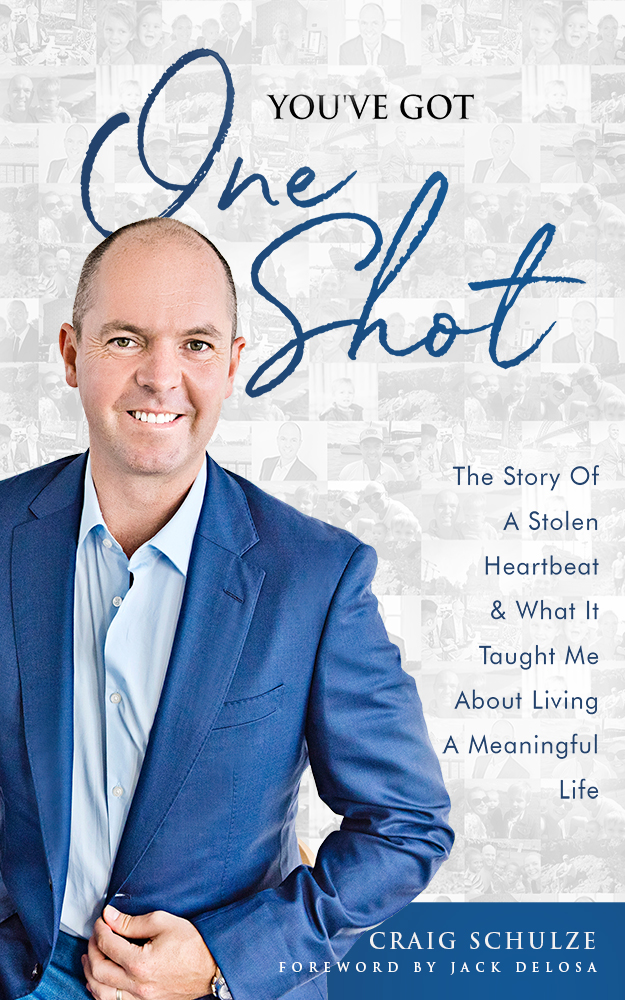
I hope you got a lot of value out of that episode with Nick Max. A lot of great insights for business that can help you grow your business. If you liked the episode, make sure that you give us a comment or review. Yes, share it with your friends because it's really important to get high quality and guests on the show like Nick to show the popularity of the show. If you haven't got a copy of my book, you've got one shot. Head over to the one shop movement dot com and grab yourself a copy.
If you're in a business, you've got a annual conference or you want to empower your staff or your franchisees or your brokers to make change, you may be interested in finding out about our signature product helping businesses, helping people make the most of their one shot at life. It can be either in a keynote speech or in workshop format. We have two different offerings there. So if that's of interest to you, make sure you head over and reach out at the one shop movement dot com or you can also reach out to me direct at Craig@CraigSchulze.com, which is S-C-H-U-L-Z-E dot com. At the end of every episode I always say you've only got one shot at life. Go and give it your best shot. Whatever that is for you, live life with passion and purpose. My name is Craig Shorts. I'm the host of the one shop movement podcast.